
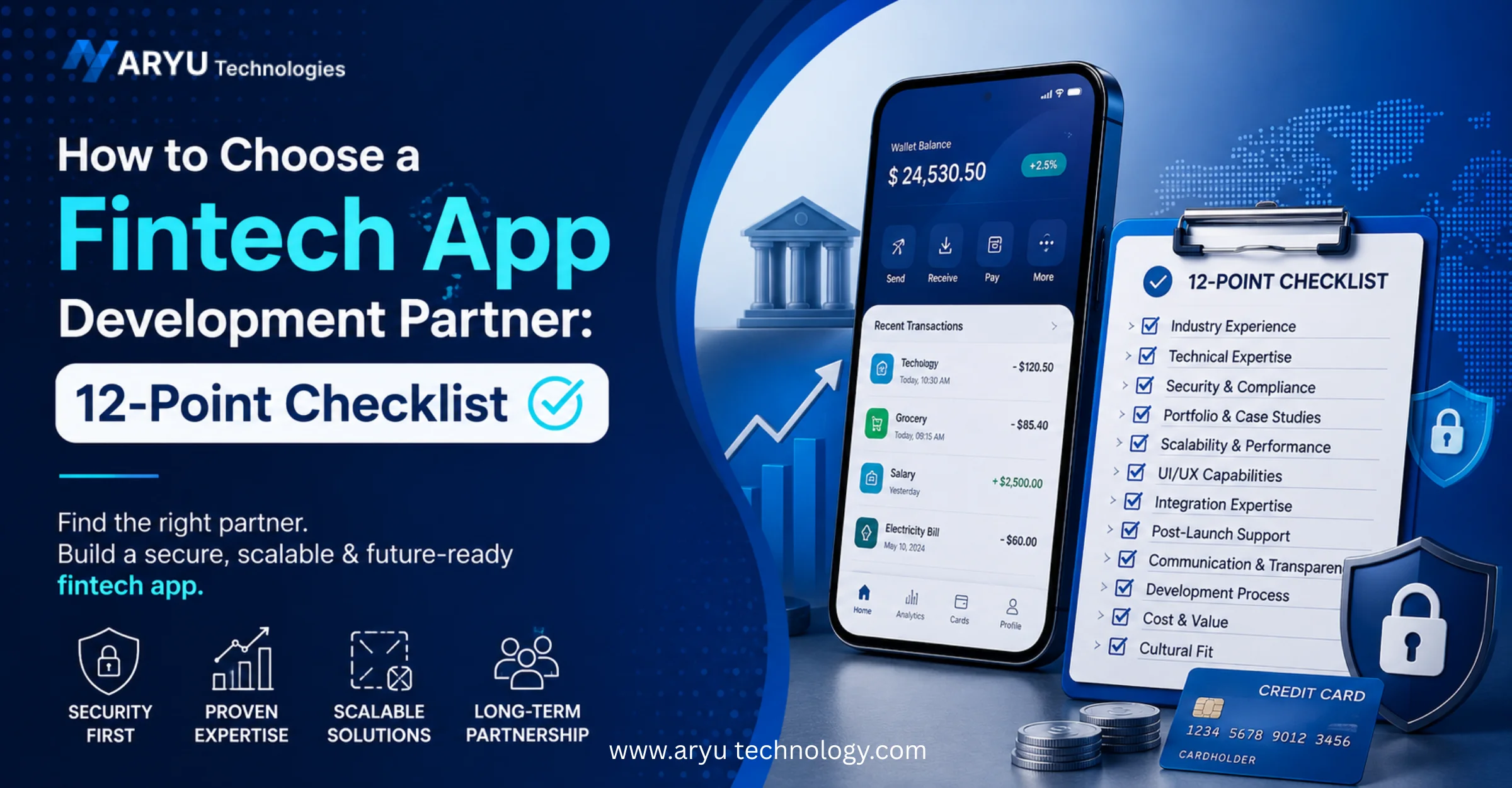
Choosing the right fintech app development partner is not just about finding a company that can build an app. Financial applications handle sensitive data, payments, transactions, and personal information, so your development partner needs to understand technology, security, compliance, and the expectations of financial users. The wrong choice can lead to security vulnerabilities, missed deadlines, poor app performance, and expensive redevelopment. The right partner, on the other hand, can help turn your fintech idea into a secure, scalable, and user-friendly product.
1. Check Their Fintech Industry Experience
Building a standard business application is very different from developing a financial product. A fintech development partner should understand areas such as digital payments, banking applications, lending platforms, investment apps, insurance technology, digital wallets, and financial management tools.
* Previous fintech projects
* Types of financial products they have developed
* Experience with financial APIs
* Payment gateway integrations
* Security practices
* Experience with financial regulations
2. Review Their Technical Expertise
Your development partner should have the technical skills required for your specific fintech product.
* React or Angular for web interfaces
* Node.js, Java, Python, or .NET for backend development
* PostgreSQL, MySQL, or other secure databases
* REST or GraphQL APIs
* AI and machine learning for fraud detection or personalization
Don’t choose a company simply because it uses popular technologies. Make sure its technology choices fit your project’s requirements, scalability needs, and long-term roadmap.
3. Evaluate Their Security Approach
A fintech application may process bank details, payment information, identity documents, and other sensitive data. Your development partner should have a clear approach to protecting that information.
* Data encryption
* Secure authentication
* Multi-factor authentication
* Role-based access control
* Secure API design
* Vulnerability testing
* Secure coding practices
* Regular security audits
* Secure cloud infrastructure
4. Ask About Compliance Knowledge
Fintech applications often operate under strict financial and data protection requirements. The exact requirements depend on your target market, product, and business model. Depending on the project, you may need to consider frameworks and regulations such as PCI DSS, GDPR, SOC 2, KYC, AML requirements, or regional financial regulations. Your development partner does not necessarily need to be your legal or compliance advisor. However, they should understand how compliance requirements can affect application architecture, data handling, authentication, logging, and integrations.
5. Look Beyond the Portfolio
A portfolio can tell you what a company has built, but it doesn’t always tell you how well the projects performed.
* Faster transaction processing
* Improved application performance
* Increased customer adoption
* Reduced operational costs
* Improved conversion rates
* Better security
* Successful third-party integrations
6. Check Their API and Third-Party Integration Experience
* Payment gateways
* Banking APIs
* Identity verification services
* Credit scoring platforms
* Accounting software
* Open banking platforms
* Fraud detection systems
* Notification services
A development partner should be comfortable working with third-party APIs and handling issues such as authentication, API limits, data synchronization, error handling, and service availability.
7. Understand Their Development Process
Before signing a contract, ask how the company actually builds software. A reliable partner should have a structured development process that may include:
1. Requirement discovery
2. Product planning
3. UI/UX design
4. Architecture planning
5. Development
6. Testing
7. Security testing
8. Deployment
9. Monitoring
10. Ongoing maintenance
8. Make Sure They Can Build for Scalability
Your fintech application may start with a few thousand users and eventually serve millions.
* Increasing users
* Higher transaction volumes
* Database growth
* API traffic
* Cloud infrastructure
* Application performance
* Future features
9. Compare Communication and Project Management
* Who will manage your project?
* How often will you receive updates?
* Which communication tools will be used?
* How will changes be handled?
* Who can answer technical questions?
* How quickly does the team respond?
10. Understand Pricing and Contract Terms
Cost matters, but the cheapest proposal isn’t necessarily the best option. A low initial quote can become expensive if important features, testing, security work, or maintenance are excluded.
* UI/UX design
* Development
* Testing
* Security testing
* API integrations
* Cloud infrastructure
* Deployment
* Maintenance
* Post-launch support