
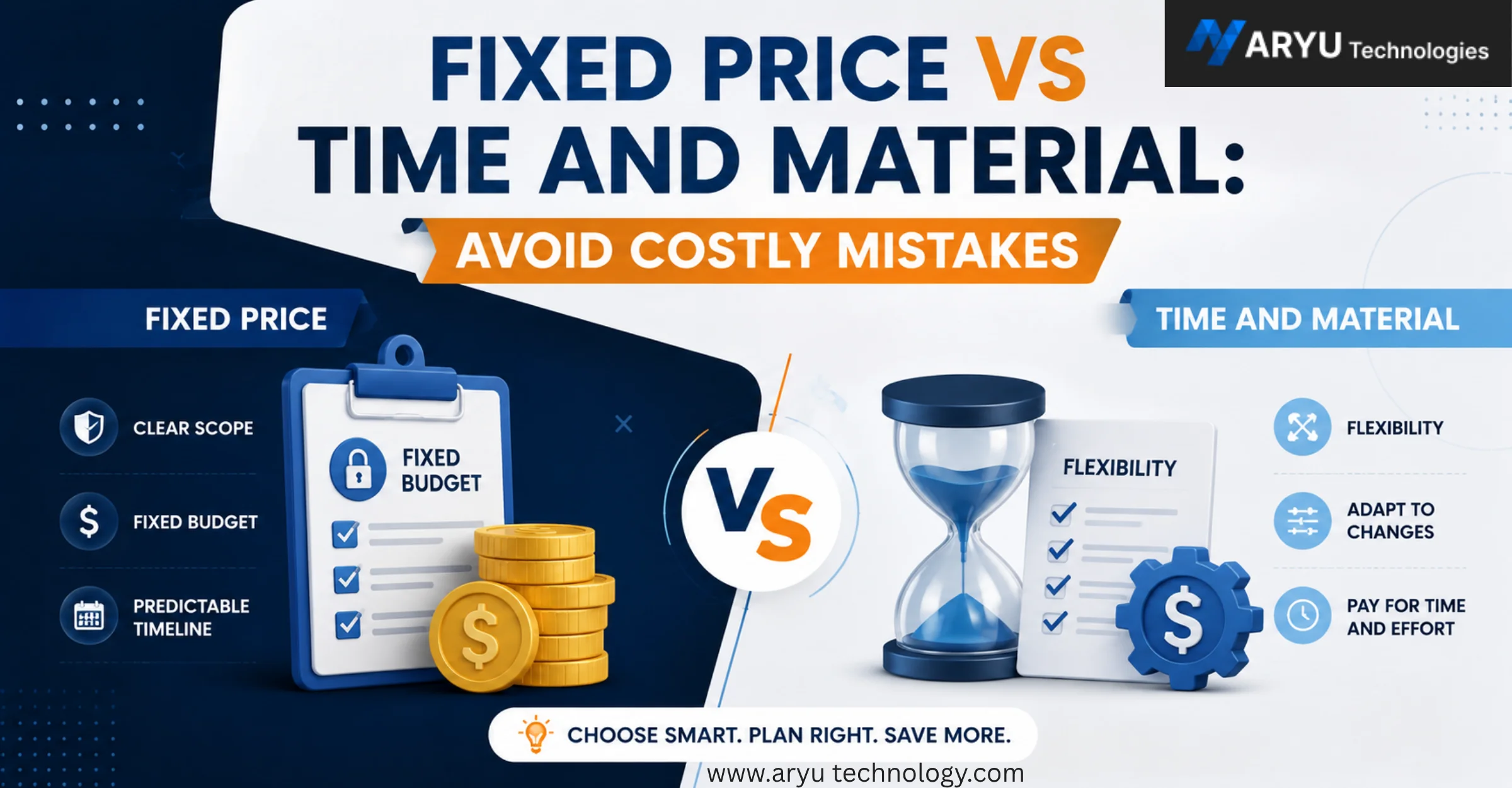
Choosing the right pricing model can make or break a software development project. At first glance, a fixed-price contract may seem safer because you know the estimated cost upfront. On the other hand, a Time and Material model offers more flexibility when requirements are likely to change. The answer depends on your project scope, priorities, timeline, and how clearly you can define your requirements before development begins. Understanding the difference between Fixed Price vs Time and Material can help you avoid unexpected expenses and choose a model that fits your project.
What Is a Fixed-Price Model?
A fixed-price model means the development team agrees to deliver a clearly defined scope of work for a predetermined price.
Project requirements
Features and functionality
Development timeline
Deliverables
Total project cost
Payment milestones
Advantages of Fixed Price
Predictable budget: You have a clear estimate of what the project should cost.
Defined scope: Everyone starts with an agreed understanding of the expected deliverables.
Easy budgeting: Businesses can plan their spending more confidently.
Suitable for smaller projects: Projects with limited features and clear requirements can benefit from this structure.
Risks of Fixed Price
The biggest issue is that software projects rarely stay completely unchanged.
If you request additional features, modify existing requirements, or change the project direction, those changes may require additional costs and time.
A rigid scope can also make it harder to respond quickly to new customer feedback or market opportunities.
What Is a Time and Material Model?
With a Time and Material model, you pay based on the actual time and resources used during development.
Instead of locking everything into one fixed scope, the project can evolve as development progresses.
Developer hours
Design and UX work
Project management
Testing and quality assurance
Other agreed development resources
Advantages of Time and Material
Greater flexibility: You can adjust features as your business needs change.
Continuous improvement: Feedback can be incorporated throughout development.
Better for complex projects: It can work well when the complete scope is difficult to predict.
Faster decision-making: Teams can prioritize important features without renegotiating the entire contract.
Risks of Time and Material
The biggest concern is budget uncertainty. If requirements expand continuously or development takes longer than expected, the total cost can increase. That is why strong project management, regular reporting, and clear priorities are essential.
Fixed Price vs Time and Material: Which Saves More Money?
A fixed-price contract can be more cost-effective when the scope is clearly defined and unlikely to change. For example, a small business website with a specific list of pages and functions may be easier to estimate accurately.
A Time and Material model may save money on projects where requirements are uncertain. Instead of paying for a large amount of contingency upfront, you can build the product in stages and adjust priorities based on real feedback.
A low fixed-price quote can become expensive when change requests, delays, or unclear requirements start appearing. Likewise, a Time and Material project can become costly without proper scope management.
Common Costly Mistakes to Avoid
1. Choosing Fixed Price for an Unclear Project
If you are still figuring out what your product should do, locking everything into a fixed scope can create unnecessary friction. Start with a discovery phase or MVP instead.
2. Choosing Time and Material Without Budget Controls
Flexibility does not mean unlimited spending.
Set a monthly or milestone-based budget and review progress regularly.
3. Comparing Only the Initial Quote
Don’t choose a development partner simply because their initial quote is the lowest.
Consider quality, communication, experience, maintenance, scalability, and potential change costs.
4. Ignoring Change Requests
Small changes can add up quickly.
Create a clear process for requesting, approving, and prioritizing new features.
5. Not Defining Success
Before development begins, establish measurable goals.
Knowing what success looks like helps prevent unnecessary features and keeps the project focused.
When Should You Choose a Fixed Price?
Your requirements are clearly documented
The project scope is unlikely to change
You have a defined timeline
Your budget needs strong predictability
The project is relatively straightforward
Deliverables can be clearly measured
When Should You Choose Time and Material?
Requirements are still evolving
You are developing a new product
Customer feedback will influence features
The project involves complex technology
You need flexibility during development
You expect multiple iterations
How predictable is my project?
If you know exactly what you need, fixed pricing may make sense. If you expect your requirements to evolve, Time and Material may provide better value. Also consider your team’s ability to manage the project. A flexible pricing model requires regular communication, prioritization, tracking, and budget monitoring. The choice between Fixed Price vs Time and Material should be based on your project’s level of certainty, not simply the initial price. Fixed Price offers predictability and works well for clearly defined projects. Time and Material offers flexibility and can be more suitable when requirements are expected to change. The real goal isn’t to find the cheapest contract. It’s to choose the pricing model that minimizes unnecessary costs while helping your project deliver the right product. When you match the pricing model to your project’s needs, you can reduce financial surprises, avoid costly mistakes, and make your development investment work harder.
FAQ
Is Fixed Price cheaper than Time and Material?
Not necessarily. Fixed Price can be more affordable for projects with stable requirements, while Time and Material may provide better
Which pricing model is better for startups?
Time and Material can be a good option for startups when the product is still evolving. It allows teams to test ideas, collect feedback, and prioritize features as the project develops.
Is a Fixed-Price contract completely risk-free?
No. Although the initial cost is predictable, changes to the agreed scope can lead to additional charges, delays, or contract changes.
How can I control costs with Time and Material?
Set clear priorities, establish spending limits, review progress regularly, track development hours, and communicate changes early.
Which model is better for an MVP?
Time and Material is often useful for MVP development because requirements can change based on user feedback. However, a clearly defined small MVP can also work well with Fixed Price.